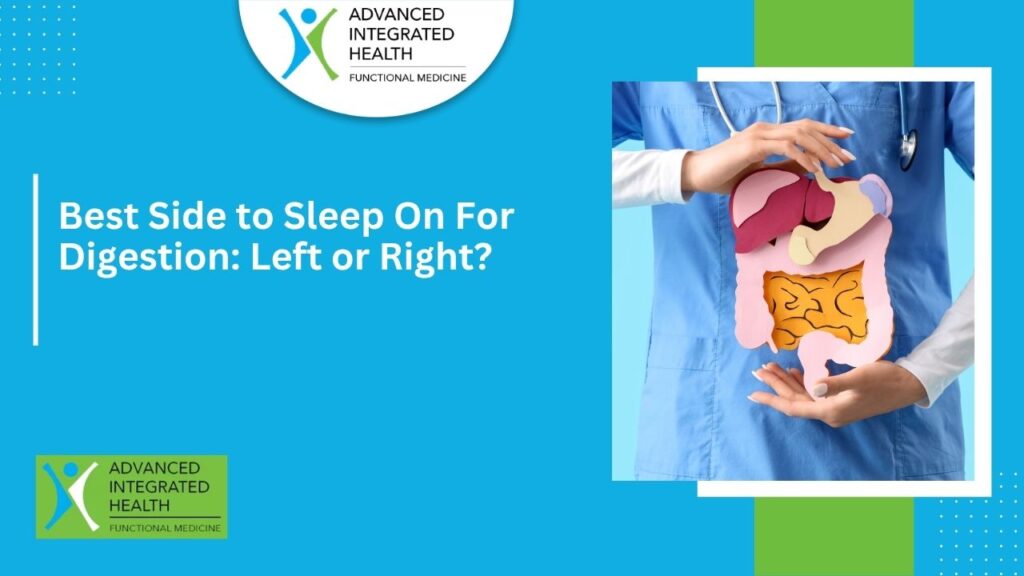
Waking up with heartburn, bloating, or digestive discomfort disrupts sleep quality and leaves mornings feeling worse than when going to bed. Food sits heavily in the stomach for hours, acid reflux flares up the moment lying down, or constipation persists despite dietary changes and hydration.
Left side sleeping is the best position for digestion. A systematic review published in the World Journal of Gastrointestinal Pathophysiology found that sleeping on your left side significantly reduces acid reflux episodes, improves gastric emptying, and supports intestinal transit by aligning with your digestive anatomy and allowing gravity to work in your favor.
This article explains the anatomical reasons left-side sleeping aids digestion, why right-side sleeping worsens stomach acid reflux, specific positioning techniques to maintain left-side sleep comfortably, and modifications for different digestive conditions, including GERD, constipation, and bloating.
Why Sleep Position Matters for Digestion?
Sleep posture affects digestive health through three mechanisms: gravity’s effect on stomach acid and food movement, anatomical positioning of the esophagus and stomach relative to each other, and pressure on abdominal organs.
Nighttime digestion operates differently than daytime due to horizontal body position and reduced muscle activity during sleep.
Is It Better to Sleep on Your Left or Right Side for Digestion?
Left side sleeping is significantly better for digestion than right side sleeping or back sleeping for most people. The systematic review analyzing multiple studies found that left lateral sleeping reduces acid exposure time by 40-60% and decreases reflux episodes by 50% compared to right-side and supine positions.
This improvement stems from anatomical positioning and gravity effect on digestion.
Three Anatomical Reasons Left Side Sleeping Improves Digestion
Your digestive anatomy determines why sleep position matters. The stomach, esophagus, and intestines have specific orientations that make certain positions more favorable for digestion improvement and symptom relief.
Here are the three main anatomical mechanisms that make left-sided sleeping optimal for digestion:
1. The Gastroesophageal Junction Positioning and Gravity
When lying on your left side, the gastroesophageal junction (where the esophagus meets the stomach) sits higher than the stomach itself due to anatomical positioning. According to Bangkok Hospital, this elevation allows stomach acid to exit the esophagus more quickly using gravity, reducing acid exposure time.
Conversely, right side sleeping positions the esophagus below the gastroesophageal junction, allowing acid to pool in the esophagus and prolonging acid clearance time. This anatomical difference explains why right-sided sleeping worsens heartburn and acid reflux symptoms, particularly for gastroesophageal reflux disease (GERD) patients.
The lower esophageal sphincter (the muscular valve preventing stomach contents from flowing backward) also functions more effectively when positioned above the stomach rather than below it. Gravity assists this valve in maintaining closure on the left side, while working against it on the right side.
2. The Stomach’s Natural Shape and Positioning
The human stomach sits predominantly on the left side of the abdomen with its greater curvature extending leftward. According to National Geographic Health, sleeping on the left side aligns with this natural positioning, speeding up digestion by moving stomach contents into the duodenum more efficiently.
When on the left side, gravity assists in moving food from the stomach into the small intestine by pulling stomach contents toward the pyloric valve (the exit point from the stomach to the intestine). This improves gastric emptying and reduces the sensation of food sitting in the stomach for extended periods.
Right-side sleeping works against this natural flow. The pyloric valve sits on the right side of the stomach, but right-side positioning can create pressure that slows stomach emptying rather than facilitating it, causing prolonged bloating and digestive discomfort.
3. Colon Anatomy Follows the Body’s Natural Curve
The large intestine follows a specific path through the abdomen: ascending colon on the right side, transverse colon across the middle, and descending colon on the left side before reaching the rectum.
Left side sleeping aids fecal matter movement by using gravity to move waste through the colon’s natural left-to-right-to-left curve, supporting intestinal transit and promoting regular bowel movements.
This gravitational assistance follows the colon’s natural curve, supporting waste elimination processes. For individuals with constipation, this positioning can significantly improve morning bowel regularity.
Why Right Side Sleeping Worsens Digestive Symptoms
While left-sided sleeping provides benefits, right-sided sleeping actively worsens several digestive issues:
- Increased acid reflux episodes: Right-side positioning places the esophagus below the stomach, allowing stomach acid to flow upward more easily and remain in contact with esophageal tissue longer, increasing heartburn severity.
- Slower gastric emptying: The pyloric valve’s position means right-side sleep can slow food movement from the stomach to the intestine, prolonging bloating and fullness sensations.
- Compressed lower esophageal sphincter: Pressure from body weight on the right side can compress this valve, reducing its effectiveness as a barrier against reflux.
- Disrupted intestinal flow: Right-side positioning works against the colon’s natural left-to-right flow pattern, potentially worsening constipation.
Best Sleep Position for Specific Digestive Conditions
While left-side sleeping benefits most people, specific digestive conditions require positioning modifications for optimal relief.
1. GERD and Acid Reflux: Left Side with Elevation
For gastroesophageal reflux disease and chronic acid reflux, left side sleeping combined with upper body elevation provides maximum relief. According to Aster Hospitals, elevating the head and chest 6-8 inches using a wedge pillow allows gravity to keep stomach acid down while left-side positioning optimizes esophageal clearance.
Sleep posture technique: Use a wedge pillow that elevates the entire upper body at a 30-45 degree incline. Place an additional pillow between the knees for spinal alignment. Avoid stomach sleeping and right side sleeping completely.
2. Constipation: Left Side for Intestinal Transit
For constipation and IBS-C, left side sleeping supports intestinal transit and morning bowel regularity through gravitational assistance on waste movement through the colon.
Sleep posture technique: Sleep fully on the left side with a body pillow for support along the front to prevent rolling onto the stomach. A pillow between the knees reduces hip pressure and maintains position. Allow 2-3 hours after the last meal before lying down.
3. Bloating: Left Side with Gentle Pressure Relief
Bloating relief benefits from left side sleeping with modifications to reduce abdominal pressure. Use slightly looser positioning with bent knees and relaxed abdominal muscles. Bloating reduction often improves within 30-60 minutes of assuming the left-side position, as trapped intestinal gas moves more freely through the colon.
How to Sleep on Your Left Side: Practical Positioning
Many people struggle to maintain left-sided sleeping throughout the night. These techniques improve comfort:
Pillow placement:
- Head and neck: Firm pillow maintaining cervical spine alignment
- Between knees: Prevents hip rotation, reduces lower back strain
- Body pillow: Hug a full-length pillow to prevent rolling onto the stomach
- Behind the back: A Small pillow prevents rolling onto the back during sleep
Gradual transition: If the left side feels unnatural, start with a 30-45 degree angle using pillows as wedges, gradually working toward the full left-side position over 2-3 weeks.
Managing shoulder and hip discomfort: Use a pressure-relieving mattress topper if pressure points develop. Alternate between left side and back sleeping if needed, avoiding right side sleeping and stomach sleeping.
How to Speed Up Digestion After Eating
Position matters most during the 2-3 hours immediately following meals when active digestion occurs and reflux risk peaks.
- Optimal post-meal positioning: Remain upright for at least 2-3 hours after eating, especially after large or fatty meals. This allows initial gastric emptying using gravity before lying down. Walking gently after meals further aids digestion improvement.
- If you must lie down sooner: Recline on the left side with the upper body elevated 30-45 degrees using a wedge pillow. This semi-upright left-side position minimizes reflux risk while providing some rest.
- Meal timing: Finish the last meal at least 3 hours before bedtime when possible. This permits substantial digestion completion before assuming sleep position, reducing overnight heartburn and bloating risk.
Other Sleep Positions: Back and Stomach Effects
Back sleeping ranks between left-side and right-side for digestive impact (better than right but worse than left for most conditions). It maintains neutral spinal alignment but increases acid reflux risk compared to the left side. If back sleeping is necessary, elevate head and upper body 30-45 degrees to reduce reflux risk.
Stomach sleeping ranks worst for digestive health:
- Creates direct abdominal pressure on the stomach and intestines
- Increases pressure on the lower esophageal sphincter, promoting reflux
- Compresses the chest, potentially affecting breathing
- Interferes with natural intestinal transit patterns
Habitual stomach sleepers should transition to left-side or back sleeping for significant digestion improvement.
Timeline for Digestive Improvements
| Symptom | Initial Improvement | Consistent Improvement |
| Acute heartburn | Same night (30–60 minutes) | 3–7 days of consistent left-side sleeping |
| Chronic GERD | 3–5 days | 2–3 weeks for a significant reduction |
| Bloating | 30–60 minutes | 1–2 weeks with dietary modifications |
| Constipation | 3–5 days to see improved morning regularity | 2–3 weeks for a stable, regular pattern |
| Sleep quality | 1–2 weeks of adaptation | 3–4 weeks to feel fully comfortable |
When to See a Doctor
Certain presentations require medical evaluation:
- Persistent severe symptoms: Heartburn or acid reflux occurring nightly despite consistent left side sleeping with elevation may indicate severe GERD requiring medical treatment.
- Progressive worsening: Digestive symptoms that worsen over time suggest underlying conditions needing diagnosis.
- New alarming symptoms: Blood in stool, unexplained weight loss, difficulty swallowing, and severe abdominal pain warrant prompt evaluation.
- Sleep apnea concerns: Loud snoring, gasping during sleep, and severe daytime fatigue suggest sleep apnea requiring a sleep study.
Frequently Asked Questions
Is it better to sleep on your left side or right side for digestion?
Left side sleeping is significantly better. Research shows it reduces acid exposure time by 40-60% and decreases reflux episodes by 50% compared to right-side sleeping by positioning the esophagus above the stomach and utilizing gravity for acid clearance.
What is the best position to sleep in for a bowel movement?
Left side sleeping promotes morning bowel regularity by using gravity to move waste through the colon’s natural left-to-right curve. Maintaining left-side position for at least 4-6 hours during the main sleep period provides sufficient time for intestinal transit improvement and morning elimination.
How to lay to speed up digestion?
Remain upright for 2-3 hours after eating to allow initial gastric emptying. If lying down sooner, recline on the left side with the upper body elevated 30-45 degrees using a wedge pillow to minimize reflux risk while providing rest.
Should you sleep on your left side if you have GERD?
Yes, left side sleeping combined with 30-45 degree upper body elevation provides maximum GERD relief. Research confirms this position reduces nocturnal acid exposure and improves symptom scores by positioning the gastroesophageal junction above the stomach and utilizing gravity for acid drainage.
Can sleeping position cause constipation?
Yes, right-side and stomach sleeping positions work against the colon’s natural left-to-right flow pattern, potentially slowing intestinal transit and worsening constipation. These positions can create abdominal pressure that impedes digestive processes and waste movement through the intestines.
How long after eating should you wait before lying down?
Wait at least 2-3 hours after eating before lying down, especially after large or fatty meals. This allows initial gastric emptying to occur while upright using gravity, reducing overnight heartburn and bloating risk when assuming sleep position.
Does sleeping on your stomach affect digestion?
Yes, stomach sleeping creates direct abdominal pressure on the stomach and intestines, increases pressure on the lower esophageal sphincter, promoting reflux, and interferes with natural intestinal transit patterns. It ranks as the worst position for digestive health.
What side should pregnant women sleep on for digestion?
Pregnant women should sleep on their left side during the second and third trimesters. This position improves blood circulation to the fetus, reduces pressure on the liver, supports kidney function, and aids digestion. Use a pregnancy pillow between the knees and under the belly for support.
Wrapping Up
Left-side sleeping improves digestion through three anatomical mechanisms: positioning the gastroesophageal junction above the stomach for gravity-assisted acid clearance, aligning with the stomach’s natural shape for efficient gastric emptying, and following the colon’s natural curve for improved intestinal transit.
Most individuals notice improvement within 3-7 days of consistent left-side sleeping, with full benefits appearing at 2-3 weeks as the body adapts and digestive patterns normalize. Combine left-side positioning with proper pillow support, meal timing (2-3 hours before bed), and upper body elevation for maximum digestive relief and improved sleep quality.
Citations:
- https://www.maine.edu/content-management/writing-style-guide/hyperlinks/
- https://medicine.yale.edu/myysm/communications-technology/publishing/writing/
- https://www.uclahealth.org/sites/default/files/documents/16/ucla-health-writing-style-guide-revised-07182025.pdf?f=a241652b
- https://medicine.iu.edu/style-guide
- https://www.healthwriterhub.com/how-to-create-a-medical-writing-style-guide/
- https://www.accp.com/docs/sap/ACCP_Style_Guide_(Abridged).pdf
- https://www.nih.gov/nih-style-guide
- https://uofuhealth.utah.edu/brand-and-style-guide/writing-guide
- https://hslguides.med.nyu.edu/scientificwritingguide/style
- https://jliedu.ch/medical-writing-guidelines/
- https://pmc.ncbi.nlm.nih.gov/articles/PMC10643078/
- https://www.bangkokhospital.com/en/bangkok/content/sleeping-on-your-left-side-reduces-gerd
- https://www.nationalgeographic.com/health/article/side-sleeping-benefits
- https://www.hindustantimes.com/lifestyle/health/this-sleeping-position-can-help-you-with-chronic-constipation-101638179541716.html
- https://www.asterhospitals.in/blogs-events-news/aster-rv-bangalore/optimal-sleeping-positions-gerd

Dr. Bob was born and raised in Florham Park, New Jersey.
He loved the philosophy of vitalism, which teaches about the incredible, innate intelligence of our bodies and its power to self-heal when given the opportunity.


