
Functional medicine can be a helpful option if you’re dealing with ongoing symptoms and not getting clear answers. Instead of only easing surface-level issues, it looks for deeper causes in your body, lifestyle, and environment. This approach can be especially useful for chronic conditions like fatigue, digestive problems, or hormone imbalances. By focusing on what’s driving the problem, understanding why choose functional medicine over conventional care can help you support long-term health, not just short-term relief. Keep reading to see how functional medicine works, how it compares with conventional care, and what benefits it may offer.
Key Takeaways
- Functional medicine looks for root causes, which can lead to more steady, long-lasting improvements in health.
- It avoids one-size-fits-all care, instead building personalized plans based on your history, lab results, and daily habits.
- It takes a wide-angle view of health, including nutrition, sleep, stress, and environment, to support both treatment and prevention.
What is Functional Medicine?

- Chronic vs. Acute Care: Conventional medicine excels in managing acute issues, such as the heart. Functional medicine is a patient-centered way of practicing healthcare that looks at how your genes, environment, and daily habits work together to affect your health. Instead of only trying to quell symptoms, it focuses on finding and addressing the root causes of illness. This often includes a detailed health history, targeted lab testing, and a shared plan between you and your clinician to create a personalized treatment approach.
- While conventional medicine often focuses on diagnosing and treating symptoms quickly, functional medicine spends more time exploring what may be driving those symptoms. The aim is not just to manage current problems, but also to lower the risk of future health issues and support a better quality of life.
- It also encourages you to be an active partner in your care, helping you understand your options and take a more informed role in your health decisions.
- Root Cause Resolution vs. Symptom Management
- One of the most significant differences between functional medicine and conventional approaches is the focus on root cause resolution. In conventional medicine, clinicians often rely on medication to manage symptoms without understanding the underlying issues. This can lead to a cycle of dependency on pharmaceuticals, which may not provide long-term solutions.
Key Points of Focus:
- Attacks or infections: using quick interventions like medication and surgery. For chronic conditions, however, it tends to prescribe medications that only mask symptoms without addressing the underlying problems.
- Functional Diagnosis: Functional medicine employs advanced laboratory tests to investigate underlying changes in the body, such as microbiome imbalances or toxic exposures. These tests help reveal issues that traditional approaches may overlook.
- Impact on Chronic Conditions: Studies indicate that functional medicine may lead to significant improvement rates in chronic conditions. For example, remission rates in autoimmune disorders can be 60-80% when leveraging functional strategies, whereas conventional methods often focus merely on symptom relief.
Understanding these differences clarifies why some patients seek out the functional medicine approach over conventional methods.
Personalized vs. Standardized Protocols

Another advantage of functional medicine lies in its individualized treatment plans, which are rooted in functional medicine care and integrative foundations that prioritize biological individuality over rigid protocols. Conventional medicine frequently applies standardized guidelines that may not account for personal variations. A diabetic patient, for instance, might receive the same metformin prescription as others, ignoring their unique health profiles and needs.
Tailored Strategies Include:
- Genetic Considerations: Functional medicine practitioners consider genetic factors, such as MTHFR mutations, when developing treatment plans, which can lead to better patient outcomes.
- Lifestyle Adaptation: Functional protocols may include adjustments in diet, exercise, and stress management tailored to individual circumstances. For instance, if mold exposure is a concern, binders and detox protocols are crafted specifically for the patient.
- Tracking and Iteration: Functional medicine often employs regular assessments to re-evaluate protocols based on ongoing patient feedback, ensuring that treatment evolves as needed.
This individualized approach stands in stark contrast to the often one-size-fits-all mentality of conventional medical practices.
Prevention and Longevity Focus
While conventional medicine typically reacts to illnesses, functional medicine emphasizes prevention through functional medicine services for personalized healing that aim to identify dysfunction long before it becomes a diagnosable disease. The focus is on recognizing subtle imbalances and correcting them early to support long-term health.
Preventative Measures Include:
- Microbiome Optimization: Functional approaches emphasize the importance of gut health, recognizing that optimizing the microbiome can significantly mitigate inflammation and other chronic disease risks.
- Lifestyle and Wellness: Functional medicine promotes practices such as good sleep hygiene and physical activity by understanding their effects on biological markers, encouraging a holistic view of health.
- Biological Age Reversal: Evidence shows that functional practices can help lower biological age, effectively improving overall vitality and longevity.
By centering prevention and long-term wellness, functional medicine leans toward a more future-focused style of health management, aiming not only to treat illness but also to protect and extend quality of life.
Patient Time and Partnership

Time spent with patients is another critical difference between functional and conventional methods. Care guided by a functional medicine doctor in Springfield often includes longer visits that allow space for meaningful dialogue, pattern recognition, and shared decision-making, far beyond the typical 15-minute appointment. Similarly, a Functional Medicine Doctor Hunterdon County at Advanced Integrated Health provides the same depth of personalized care, ensuring every patient feels heard, supported, and guided toward lasting health.
Patient-Centric Engagement:
- Extended Consultations: Functional medicine often includes in-depth consultations to gather comprehensive health histories, discuss lifestyle factors, and assess symptoms effectively.
- Collaboration and Tracking: Patients are encouraged to be active participants in their health management. Through monitoring devices, like Heart Rate Variability (HRV) trackers, individuals can observe their progress and collaborate with practitioners for real-time adjustments.
- Adherence and Compliance: This engagement often results in better adherence to health plans compared to conventional models. Research indicates that 90% of functional patients adhere to their treatment plans, compared to just 50% in conventional scenarios.
This kind of partnership can help people feel more informed and more in control of their health path, aligning daily choices with long-term goals in a practical, grounded way.
Evidence and Cost Effectiveness
| Factor | Conventional Medicine | Functional Medicine |
|---|---|---|
| Primary cost focus | Acute treatment and symptom management | Prevention and root-cause resolution |
| Upfront expenses | Often lower for single visits or medications | Higher initial investment for testing and consultations |
| Long-term healthcare costs | Can increase due to repeat visits, medications, or procedures | Often reduced by preventing complications and disease progression |
| Evidence model | Strong pharmaceutical RCT history | Growing evidence from systems-based and clinical outcome data |
| Impact on quality of life | Symptom control with ongoing dependence on care | Improved daily function and long-term health stability |
| Lifetime ROI | Variable, often higher with chronic conditions | Frequently higher due to reduced future interventions |
Cost is an essential consideration for healthcare choices. While conventional medicine has an established history of randomized controlled trials for pharmaceuticals, functional medicine leverages emerging data to support its effectiveness.
Financial Considerations:
- Preventative ROI: The investment in functional medicine can lead to long-term savings by averting serious complications, hospitalizations, and surgeries associated with untreated chronic conditions.
- Cost-Benefit Analyses: Although some may view functional medicine as expensive upfront, its lifetime ROI often surpasses conventional interventions. Patients may prevent costs related to lengthy hospitalization through effective management and resolution of their symptoms.
- Improved Quality of Life: Ultimately, superior health outcomes lead to enhanced quality of life and reduced healthcare burdens, providing both personal and systemic benefits.
Choosing functional medicine aligns long-term health goals with economic benefits, making it a viable option in preventive care strategies.
When Conventional Still Wins
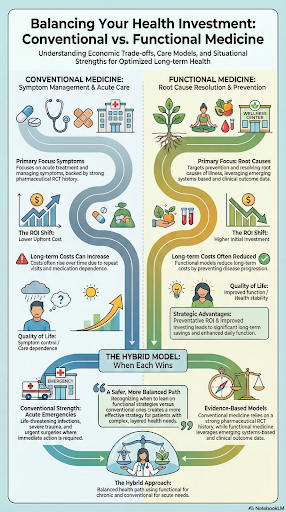
Despite its numerous advantages, functional medicine isn’t a panacea for all health issues. Conventional medicine remains essential for acute conditions where immediate action is needed, such as surgery or life-threatening infections.
Situational Strengths:
- Acute Medical Emergencies: Conventional models excel in urgent need scenarios. Conditions like severe trauma or infections require swift care that traditional healthcare systems are designed to provide.
- Collaboration of Approaches: The most effective health strategies may arise from hybrid models, where functional medicine manages chronic issues while conventional treatments address acute flare-ups.
- Complementary Benefits: Both modalities can coexist. A functional approach can provide ongoing management while conventional methods offer emergency interventions.
Many patients live with layered, complex needs, long-term conditions mixed with sudden health events. Recognizing when to lean on functional strategies and when to rely on conventional medicine can create a safer, more balanced path to better health.
Frequently Asked Questions
Why does functional medicine focus on root causes instead of symptoms?
Functional medicine prioritizes root cause resolution functional care, rather than symptom management, conventional models. It looks at genetic and environmental triggers, lifestyle factors, and biological systems together. This holistic systems biology approach helps identify why illness develops, not just what diagnosis fits. The goal is long-term balance, prevention, and fewer recurring health problems.
How are personalized treatment plans different from conventional care?
Personalized treatment plans are built through comprehensive patient history intake and extended consultations. This patient-centered care model considers nutrition, stress, sleep, hormones, and gut health together. Conventional time-constrained visits often focus on isolated symptoms. Functional care adapts plans over time to match how each person’s body responds.
What role do advanced tests play in functional medicine decisions?
Functional medicine uses functional lab panels advanced beyond basic screening. These may include organic acids metabolomics testing, stool analysis, dysbiosis markers, hormone mapping, and food sensitivity MRT testing. Genetic SNP methylation analysis can reveal detox and nutrient needs. These tools guide precise lifestyle, dietary, and supplement decisions.
How does functional medicine support chronic illness prevention?
Functional care uses a chronic illness prevention strategy focused on stress inflammation reduction, gut microbiome restoration protocol, hormone adrenal balance, and sleep circadian rhythm repair. By addressing leaky gut permeability, nutrient deficiencies, and immune triggers early, patients often reduce flare frequency and support long-term resilience instead of reacting to crises.
Can functional medicine work alongside conventional treatments safely?
Functional medicine complements conventional strengths like emergency intervention excellence, surgery, pharmaceutical expertise, and acute care. It adds evidence-based natural therapies such as dietary intervention protocols, targeted nutrient therapy, mind-body connection healing, and detoxification liver support pathways. Many people choose both models together for balanced, coordinated care.
Considering a Different Path: Is Functional Medicine Right for You?
Many people feel stuck managing the same chronic symptoms without real answers, and that’s where functional medicine can offer a different path. By focusing on root causes and personalized care, this approach looks beyond quick fixes and supports long-term health, prevention, and a more active partnership between you and your provider.
If you’re considering a new way to approach your health, a guided consultation with Advanced Integrated Health can help clarify your concerns, explore personalized options, and create a thoughtful plan centered on functional medicine, integrative care, and holistic wellness.

Dr. Bob was born and raised in Florham Park, New Jersey.
He loved the philosophy of vitalism, which teaches about the incredible, innate intelligence of our bodies and its power to self-heal when given the opportunity.