
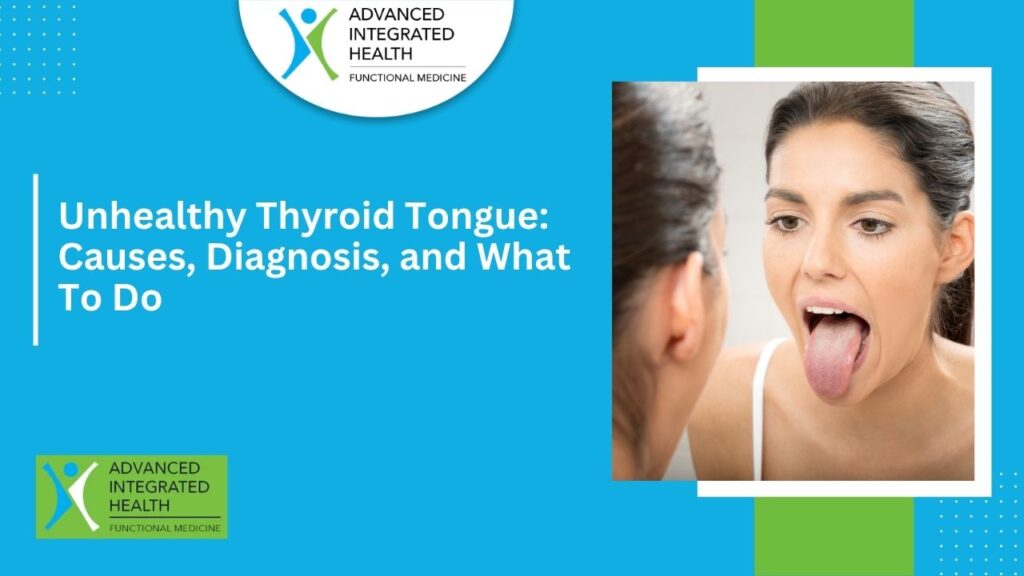
Most people don’t think of their tongue as a clue to their thyroid health. But in some cases, an unhealthy thyroid tongue can reveal underlying hormonal imbalances, especially involving the thyroid gland. The thyroid regulates metabolism, energy production, temperature control, and many other body systems.
When it becomes underactive (hypothyroidism) or overactive (hyperthyroidism), subtle physical signs can appear, including in the mouth. Noticed swelling, scalloped edges, unusual texture, or persistent changes in your tongue? Wondering whether your thyroid could be involved? Well, you’re not alone. Let’s explore what an “unhealthy thyroid tongue” really means, what causes it, and how doctors evaluate it!
Quick Summary
An “unhealthy thyroid tongue” often refers to tongue swelling (macroglossia) or scalloped edges linked to hypothyroidism, but these changes can also have other causes.
- Most commonly associated with an underactive thyroid
- Can also be caused by sleep apnea, deficiencies, or allergies
- A simple thyroid blood test (TSH, free T4) can help clarify
What Is an “Unhealthy Thyroid Tongue”?
The term “unhealthy thyroid tongue” isn’t a formal diagnosis. It refers to tongue changes that may be linked to thyroid dysfunction, particularly hypothyroidism. The most commonly discussed findings include:
Macroglossia (Enlarged Tongue)
Macroglossia means the tongue appears larger than normal. It may feel thick, heavy, or press against the teeth. Hypothyroidism can cause tissue swelling due to fluid retention and glycosaminoglycan buildup, leading to enlargement. According to the National Library of Medicine (PMC), oral manifestations of thyroid disease can include tongue enlargement and other mucosal changes in hypothyroidism.
Scalloped or Indented Edges
A scalloped tongue shows tooth-shaped indentations along the sides. This can happen when a swollen tongue presses against the teeth. However, it may also result from bruxism, sleep apnea, mouth breathing, or mild swelling from other causes; so evaluation is important.
Pale, Smooth, or Puffy Appearance
Hypothyroidism may cause the tongue to look pale, slightly puffy, or smooth. Slowed metabolism can affect oral tissues, leading to subtle swelling rather than dramatic enlargement.
Why Does Hypothyroidism Affect the Tongue?
To understand this, it helps to know what hypothyroidism does in the body. When the thyroid doesn’t produce enough hormones (T3 and T4), metabolism slows.
This can lead to:
- Fluid retention
- Tissue swelling (myxedema)
- Dry skin
- Fatigue
- Cold intolerance
- Weight gain
The same process that causes puffiness in the face or extremities can also affect the tongue. Enlargement of the tongue is one of the possible physical signs of hypothyroidism.
In more advanced cases, tongue swelling may contribute to:
- Mild speech changes
- Snoring
- Difficulty swallowing
- Dental impressions along the tongue edges
That said, severe enlargement is uncommon in mild or early thyroid dysfunction.
How Doctors Evaluate an Unhealthy Thyroid Tongue
If you visit a healthcare provider for tongue changes, the evaluation usually involves:
1. Medical History
Your provider may ask about:
- Fatigue
- Weight changes
- Cold sensitivity
- Hair thinning
- Constipation
- Menstrual irregularities
- Family history of thyroid disease
These symptoms help determine whether thyroid dysfunction is likely.
2. Physical Examination
The clinician will examine:
- Tongue size and texture
- Dental impressions
- Airway space
- Neck (for thyroid enlargement or nodules)
They may also assess reflexes and skin texture, which can provide additional thyroid clues.
3. Blood Tests
The most important tests include:
- TSH (thyroid-stimulating hormone)
- Free T4
TSH is typically the first-line screening test for thyroid dysfunction. Abnormal results may indicate hypothyroidism or hyperthyroidism and guide further management. If nutritional deficiency is suspected, additional labs such as CBC, ferritin, or vitamin B12 may be ordered.
Treatment: What Happens If It Is Thyroid-Related?
If testing confirms hypothyroidism, the standard treatment is thyroid hormone replacement, typically with levothyroxine. As hormone levels normalize, tissue swelling (including tongue enlargement) often improves, though it may take several weeks to months to notice changes.
Improvement depends on:
- How long were thyroid levels abnormal
- How severe the swelling is
- Whether other contributing factors are present
Follow-up blood testing is usually done 6-8 weeks after starting treatment to ensure hormone levels are stabilizing. For most, tongue symptoms improve when thyroid balance returns.
How Long Does It Take for a Thyroid Tongue to Improve?
If hypothyroidism is the cause and treatment is started, improvement can begin within weeks, but full resolution may take a few months. Factors influencing recovery include:
- Consistency of medication use
- Proper dosage adjustment
- Addressing coexisting conditions (like deficiencies or sleep apnea)
If tongue swelling persists despite normalized thyroid labs, further evaluation is warranted to rule out other causes.
Self-Care Tips While You’re Getting Evaluated
While medical testing is essential, a few practical steps may help reduce discomfort:
- Maintain good oral hygiene
- Stay hydrated
- Use a humidifier if mouth breathing is an issue
- Avoid alcohol-based mouthwashes if the tongue feels irritated
- Eat softer foods if chewing feels difficult
If scalloping is present, addressing nighttime teeth grinding (with a dental guard, if recommended) may reduce pressure patterns.
Frequently Asked Questions
Can hypothyroidism really make my tongue swell?
Yes. Hypothyroidism can cause tissue swelling due to fluid retention and mucopolysaccharide accumulation, which may enlarge the tongue over time.
Will my tongue go back to normal with treatment?
In many cases, yes. Once thyroid hormone levels are normalized, swelling often improves gradually.
Does a scalloped tongue always cause thyroid problems?
No. Scalloped edges can also result from sleep apnea, bruxism (teeth grinding), mild swelling, or other causes.
What tests are used to check for thyroid-related tongue changes?
The primary blood tests are TSH and free T4. Additional labs may evaluate iron, vitamin B12, or other nutritional markers.
Could an enlarged tongue be dangerous?
Gradual thyroid-related enlargement is usually not dangerous. However, rapid swelling with breathing difficulty is a medical emergency.
Final Thoughts
An “unhealthy thyroid tongue” can be an important visual clue. It’s crucial when paired with symptoms like fatigue, cold intolerance, weight changes, or dry skin. But tongue changes alone don’t confirm thyroid disease. The key is proper evaluation. A simple blood test can clarify whether your thyroid is involved and guide appropriate treatment.
If you’ve noticed persistent tongue swelling, scalloping, or other unexplained changes, it’s worth having a professional assessment. At Advanced Integrated Health, we take a comprehensive approach. We look at thyroid health, nutritional status, and whole-body factors to identify the root cause and create a personalized plan. If you’re concerned about thyroid medication risks, read our detailed guide on thyroid hormone replacement risks. Learn more about how we address thyroid goiters in our natural goiter shrinking guide. Our holistic thyroid support approach helps you address underlying thyroid imbalances. Schedule a consultation today.

Dr. Bob was born and raised in Florham Park, New Jersey.
He loved the philosophy of vitalism, which teaches about the incredible, innate intelligence of our bodies and its power to self-heal when given the opportunity.