
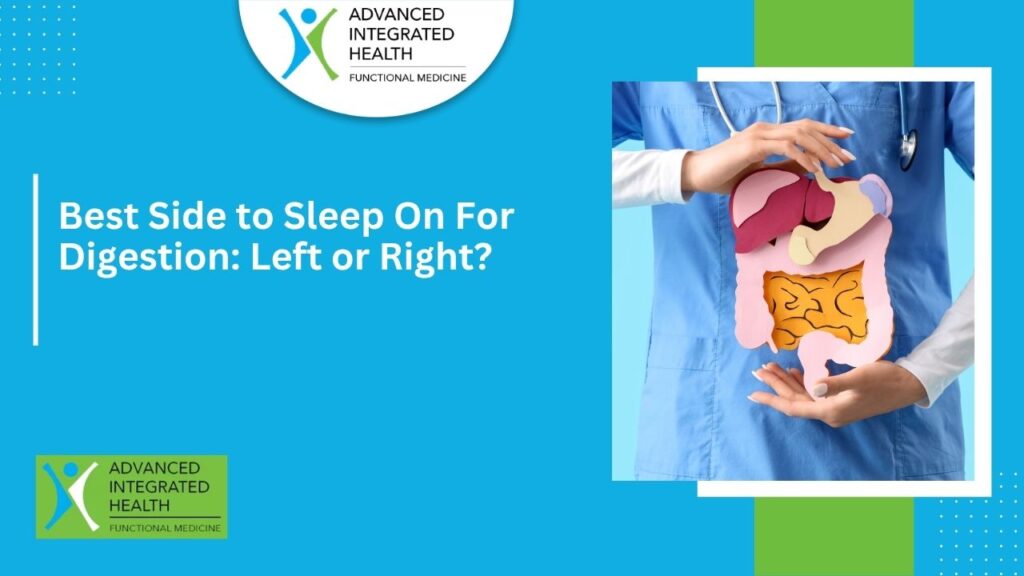
If you’ve ever woken up with heartburn or a bloated, uncomfortable stomach, you’ve probably wondered whether changing your sleep position could help. The best side to sleep on for digestion is usually your left side for acid reflux and overall gut comfort. Below is a friendly, evidence-based guide explaining why, plus practical tips to help you sleep better and keep your digestion calm.
Quick Summary
Sleep on your left side for digestion.
- Left-side sleeping helps stomach acid clear from the esophagus faster, so it often reduces nighttime reflux.
- Elevate the head of the bed and avoid lying down right after meals for extra benefit.
- If left-side sleeping is uncomfortable, try supportive pillows or gradual training; the combo of left side + head elevation is the most helpful.
Why Sleep Position Affects Digestion
Your stomach sits mostly on the left side of your upper abdomen. The lower esophageal sphincter (LES) sits where the esophagus meets the stomach. This muscle normally stops stomach contents from backing up into the esophagus. So, When you lie down, gravity no longer helps keep stomach contents down. Sleeping on your left side places the stomach below the esophagus in a way that helps acid and gastric contents drain away from the LES and esophagus more easily.
Lying on the right side or flat on your back can allow acid to pool near the LES and make reflux more likely. That anatomical setup is the simple reason many clinicians recommend left-side sleeping for people with reflux or nighttime heartburn.
What the Research Shows: Left Side Wins for Reflux
A growing body of evidence supports the left-sided advantage for reducing nocturnal reflux. A recent systematic review and meta-analysis concluded that sleeping on the left (left lateral decubitus) reduces nocturnal reflux episodes and improves GERD-related quality of life compared with right-side or supine sleeping.
Other studies measuring esophageal acid exposure show that acid clears faster when people are on their left side, and total reflux time is shorter than on the right side or back. Harvard Health summarizes these findings and notes that left-sided sleeping can help nighttime heartburn sufferers get more reflux-free sleep.
Bottom line: for many people with reflux or GERD, left side + head elevation helps the most.
Left Side With Head Elevation Is the Best Combo
Two simple adjustments work together:
- Sleep on your left side. This uses anatomy and gravity to keep acid away from the esophagus.
- Elevate the head of the bed (6-9 inches) or use a wedge pillow. This reduces backflow by allowing gravity to further discourage acid from reaching the esophagus. Experts recommend elevating the head of the bed for people who have nighttime heartburn.
Extra tip: Stacking regular pillows usually doesn’t work well; it flexes your neck and can be uncomfortable. Instead, use bed risers under the head of your mattress or a wedge pillow that supports the upper body.
Who Benefits Most from Left-Side Sleeping?
- People with GERD or frequent nighttime heartburn. The left side reduces the time the acid spends in the esophagus, and a functional medicine doctor in Cumberland County can help address the underlying gut drivers when reflux is chronic.
- Pregnant people (especially later pregnancy). Left lateral position also improves maternal circulation and often reduces reflux.
- People with nighttime coughing or reflux-related asthma symptoms. Clearing acid faster can reduce nocturnal symptoms.
If you have these symptoms, switching to left-side sleeping is a low-risk move that often helps.
When the left side might not be Ideal
Although the left side is usually best for digestion, it’s not a universal fix.
- Orthopedic pain or shoulder issues: If left-side sleeping causes shoulder pain, it won’t be comfortable. Use supportive pillows or try the right side with head elevation.
- Some heart patients or those with specific cardiac devices should follow individualized medical advice; however, for most people, side sleeping is fine.
- Severe obstructive sleep apnea: Positional changes can help mild OSA, but moderate-to-severe OSA usually requires CPAP or medical therapy; don’t rely on sleeping left side alone.
As always, if you have complex medical issues, check with your clinician about the best sleep posture for you.
Practical Tips to Train Yourself to Sleep on the Left
If you’re not used to sleeping on your left, try these easy tricks:
- Use a body pillow: Hugging a long, firm body pillow keeps you from rolling onto your back or right side.
- Pillow placement behind your back: Place a small pillow behind your back so you feel the pressure when you try to roll onto it.
- Knee pillow: Put a pillow between your knees to keep hip alignment and reduce lower-back strain.
- Wedge pillow or bed risers: Elevate the head of the bed 6 to 9 inches. This helps even if you shift positions during the night.
- Positional alarms / wearable trackers: If you wake up frequently on your back, some devices vibrate gently when you move off your preferred side.
Start small: try left-side sleep for a few nights and pay attention to nighttime symptoms and morning comfort.
Meal and Lifestyle Habits that Amplify the Benefit
Position helps, but it’s most powerful when combined with good habits:
- Don’t lie down for 2-3 hours after meals. You want gravity helping digestion first; sitting up after eating reduces reflux risk.
- Avoid trigger foods before bed. Spicy foods, citrus, tomato products, chocolate, caffeine, and alcohol are common culprits.
- Eat smaller evening meals. Big meals increase stomach pressure and reflux chances.
- Lose weight if needed. Even modest weight loss can reduce reflux frequency.
- Quit smoking. Tobacco relaxes the LES and makes reflux worse.
Combine these habits with left-side sleeping for the best results. If reflux keeps returning despite these adjustments, a functional medicine doctor in Essex County can look at the gut and dietary drivers behind it.
Frequently Asked Questions
Is the left side always best for everyone?
No. It’s best for reflux and many digestive complaints, but personal comfort, orthopedic issues, or specific medical conditions may require adjustments.
Can sleeping on the right side cause reflux?
The right side can allow more acid to pool near the LES in some people, potentially increasing reflux episodes versus the left side.
How much should I elevate my bed?
Aim for about 6-9 inches (15-23 cm) at the head of the bed. Use risers or a wedge pillow, as stacking normal pillows isn’t as effective.
I wake up on my back; is left-side training worth it?
Yes. Positional training, pillows, and gradually changing habits often work over a few weeks.
Final Thoughts
For digestion and nighttime reflux, sleeping on your left side is a simple, low-risk change that often helps. Pair left-side sleeping with head elevation and common-sense habits. Avoid late heavy meals, reduce triggers, and manage weight. Then you can give your digestive system a real head start.If symptoms persist despite these changes, check in with your clinician or a functional medicine doctor in Gloucester County for tailored advice that addresses the root causes of your digestion issues. Want help making the change comfortable? Contact us today at Advanced Integrated Health for personalized assistance.

Dr. Bob was born and raised in Florham Park, New Jersey.
He loved the philosophy of vitalism, which teaches about the incredible, innate intelligence of our bodies and its power to self-heal when given the opportunity.