
A complex illness consultation in New Jersey is a longer, more in-depth medical visit for people with chronic, confusing health problems that affect many parts of the body and don’t respond well to standard treatment.
Instead of focusing on one diagnosis or one symptom, the visit looks at your health from medical, behavioral, and lifestyle angles to better understand what’s going on and what might actually help over time. If you’ve felt stuck with ongoing symptoms and no clear plan, keep reading to see how this type of consultation works and when it may be a good fit for you.
Key Takeaways
- We use complex illness consultations to address chronic conditions involving multiple body systems rather than one diagnosis.
- We often involve medical, behavioral, and functional perspectives to support long-term symptom management.
- We focus on coordinated care plans instead of isolated treatments or short visits.
What Is a Complex Illness Consultation in New Jersey?
A complex illness consultation in New Jersey is a specialist-led visit for people with long-lasting, multi-system conditions that don’t improve with routine care. The goal is to look at your health as a whole, using medical, functional, and behavioral perspectives grounded in functional medicine care principles, instead of chasing one symptom at a time.
These visits are usually longer than standard appointments and often involve:
- A detailed review of your medical history and symptom timeline
- Looking at prior labs, imaging, and treatments
- Exploring how stress, sleep, nutrition, trauma history, and daily life affect your health
This model is different from typical specialty care, which often focuses on one organ system or a single diagnosis. Complex illness consultations recognize that many patients have overlapping conditions and need ongoing review and adjustment over months, not a one-time decision. Common conditions seen in this setting include autoimmune disorders, fibromyalgia, Lyme disease, and post-treatment Lyme symptoms, and chronic fatigue–type conditions that affect energy, thinking, and daily function.
If you’ve tried standard care and still feel unwell, understanding how these consultations work may help you decide whether this approach fits your situation.
Who Should Seek a Complex Illness Consultation?

Alt Text: Patient reviewing lab results before complex illness consultation, New Jersey appointment for chronic condition care
Some patients reach a point where their symptoms no longer fit in a simple box, and that’s usually when a complex illness consultation becomes worth considering. This kind of visit is designed for people who have long-lasting, confusing, or overlapping symptoms that haven’t improved with standard care, even after many appointments and different treatment plans.
You may be a good fit if you recognize yourself in patterns like:
- Multiple diagnoses but limited or temporary relief
- Long-term fatigue, pain, or brain fog with “normal” test results
- Medications added over time without real improvement in daily function
These consultations are not only for very severe diseases. They’re also helpful when your symptoms keep disrupting work, school, family life, or sleep, even if no one has found a clear cause yet. The focus is on patterns over time, not just one lab result or single visit.
Emotional strain is another reason people seek this kind of care. Long-term illness often brings stress, frustration, and worry, which can blend into the physical symptoms. A complex illness consultation makes room for both your body and your mental load, aiming to create a realistic, long-term plan.
What Services Are Included in Complex Illness Consultations?
Complex illness consultations usually bring several services together so your care feels connected instead of scattered. The focus is on understanding why symptoms keep going, not just naming them.
Most consults start with a detailed review phase. This often takes more time than a standard visit and can include:
- Extended medical history and symptom mapping
- Review of prior records, labs, imaging, and diagnoses
- Medication and supplement review, including side effects and interactions
After that, the clinician may order targeted tests when needed (for example, immune or inflammatory panels) and begin building a long-term care plan. Follow-up visits focus less on retelling your story and more on what the results mean and what to change next. Care plans often branch into several support areas, such as nutrition and sleep planning to support energy, mood, and recovery, reflecting functional medicine services designed for personalized healing over time.
Together, these services aim to create a clearer big-picture view of your health, so each step in your care feels more intentional and less like trial and error.
| Service Type | Purpose | Example |
|---|---|---|
| Diagnostic testing | Identify hidden drivers | Immune or inflammatory panels |
| Care coordination | Align providers | Case reviews and referrals |
| Behavioral health | Support coping skills | CBT-informed therapy |
Which Providers Offer Complex Illness Consultations in New Jersey?
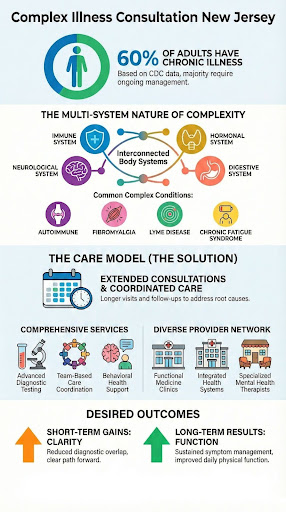
Many patients in New Jersey find complex illness consultations through a mix of medical and mental health providers rather than a single “right” clinic. That reflects how chronic illness often affects immune, nervous, digestive, and emotional health all at once.
Common sources for these consultations include:
- Functional and integrative medicine clinics
These clinics usually focus on biological drivers and lifestyle patterns. They may use more detailed testing and often see patients with autoimmune conditions, Lyme disease, fibromyalgia, or chronic fatigue–type syndromes. - Integrated health systems
Larger hospitals or health networks sometimes offer structured, complex care programs. A nurse practitioner or physician may help coordinate between specialties, review your full history, and work with you to set realistic priorities and goals. - Mental health–focused providers
Therapy practices support the emotional and cognitive strain of long-term illness, including anxiety, depression, grief, and burnout. Centers such as Life InSight Center offer counseling for people living with chronic conditions, and directories like Psychology Today list New Jersey therapists who work with health-related concerns.
Many people end up using more than one of these options over time, so effective complex illness care often depends on steady communication and shared planning between providers.
How Does Functional Medicine Support Complex Chronic Illness?

Some patients reach functional medicine after trying many standard treatments and still feeling unwell, and that’s usually where this model can add something different. Functional medicine is used to explore why symptoms keep happening by looking at body systems together, along with daily habits and stress.
Instead of focusing only on one symptom or organ, functional medicine tends to:
- Look at patterns across digestion, immune health, hormones, sleep, and mood
- Use longer visits to review history, lifestyle, and lab results in more detail
It usually works alongside primary care or specialist treatment, not in place of it. Your primary doctor may manage medications and urgent issues, while functional medicine helps explore contributors such as:
- Gut and immune health (for example, how digestion and inflammation may relate)
- Hormonal balance and energy patterns across the day
- Lifestyle factors like nutrition, movement, sleep, and stress exposure
For complex chronic illness, this combined view can help create more tailored plans, especially when symptoms cross several systems and haven’t responded well to routine care alone.
How Do Patients Access Complex Illness Consultations in New Jersey?
Many patients in New Jersey reach complex illness consultations either by referring themselves or through a doctor’s recommendation. The path can look a little different depending on where you go. Larger hospital systems often ask for a referral from your primary care doctor or a specialist, while many private or functional medicine clinics allow you to book directly online or by calling the office.
Most places follow a similar intake process, which usually includes a brief screening form or phone call to understand your main concerns, often as a first step before deciding whether to book a root cause health discovery call for deeper review.
Costs and wait times can vary:
- Private clinics may involve more out-of-pocket payment, but sometimes have shorter waits.
- Health system–based programs are more likely to work closely with insurance but may have longer delays.
- Some community or non-hospital practices can offer quicker scheduling.
Planning, by gathering records early, asking about insurance, and checking current wait times, can help you move through the process with fewer surprises and make that first extended visit more productive.
Frequently Asked Questions
When should I consider a complex illness consultation in New Jersey?
You should consider a complex illness consultation in New Jersey when symptoms persist, overlap, or remain unexplained despite ongoing care. This type of consultation reviews medical history, diagnostic testing, and daily health patterns together. It supports people with complex chronic conditions by improving symptom management, guiding specialist referrals, and creating personalized chronic care plans for long-term monitoring.
How does a functional medicine consultation in New Jersey support chronic illness?
A functional medicine consultation in New Jersey focuses on identifying underlying contributors to chronic illness rather than isolated diagnoses. It evaluates nutrition, stress, sleep, infections, and lifestyle adjustments for chronic health. This approach is commonly used for autoimmune disease counseling NJ, chronic fatigue syndrome care, and fibromyalgia treatment centers seeking root cause functional medicine and evidence-based chronic support.
What is multidisciplinary illness team care for complex conditions?
Multidisciplinary illness teams coordinate care across multiple specialties for complex health needs. This may include board-certified internist chronic care, infectious disease specialists in NJ, neuropsychological evaluation in NJ, and complex care nurse practitioners. Team-based care improves diagnostic accuracy, supports palliative care coordination in NJ when needed, and strengthens primary care chronic monitoring across all stages of illness.
What mental health therapies help people manage chronic illness?
Mental health support plays a critical role in chronic illness care. Evidence-based options include CBT for chronic illness, ACT therapy for chronic health, and mindfulness stress reduction and illness. These therapies address anxiety and depression linked to chronic illness, improve emotional resilience to chronic disease, reduce isolation, support body image challenges, and strengthen coping skills for daily symptom-related stress.
How are follow-up care and access managed for chronic illness patients?
Chronic illness care relies on structured follow-up and reliable access. Many patients use video visit chronic consultation alongside in-office chronic evaluation. Priority access for chronic patients receives ongoing illness monitoring, preventive chronic illness strategies, and coordinated family discussions about health conditions. This approach supports caregivers, ensures consistent symptom tracking, and adapts care plans as health needs change over time.
Complex Illness Consultation New Jersey: Moving Forward With Care
Many patients reach a point where they’re tired of repeating their story, collecting new labels, and still not getting a clear path forward. Complex illness consultations are designed to change that rhythm. For patients in New Jersey who want functional, integrative, and root-cause–focused care, Advanced Integrated Health offers a personalized Health Strategy Session that follows this model. Scheduling a session can be a realistic first step toward more coordinated care and a clearer direction.

Dr. Bob was born and raised in Florham Park, New Jersey.
He loved the philosophy of vitalism, which teaches about the incredible, innate intelligence of our bodies and its power to self-heal when given the opportunity.