
Hashimoto’s thyroiditis is the most common cause of hypothyroidism in iodine-replete countries, accounting for up to 90% of cases. It affects roughly 5% of US adults, and women are 7 to 10 times more likely than men to develop it. Most patients are told they have a thyroid problem. They don’t. They have an immune system problem that happens to be targeting the thyroid. So what are the root causes of autoimmune thyroid Hashimotos, and why do they matter more than the diagnosis itself?
Once you understand that, the question changes. It’s no longer “how do I replace thyroid hormone forever?” It’s “why is my immune system attacking my thyroid, and what’s driving it?” Hashimoto’s disease (NIDDK) is autoimmune, which means there are upstream triggers worth identifying. Below are the five root causes the research keeps pointing to and the labs that catch it earlier than a routine TSH ever will.
Quick Summary
- Hashimoto’s is autoimmune. Your immune system makes antibodies (TPO and TgAb) that gradually destroy thyroid tissue.
- It’s the cause of up to 90% of hypothyroidism in countries with adequate iodine.
- Five triggers keep showing up in the literature: chronic stress, infections (especially EBV), nutrient deficiencies (selenium, vitamin D, iron), food sensitivities (gluten in particular), and environmental toxins.
- TSH alone misses it. The diagnostic markers are TPO antibodies and TgAb antibodies, which can be elevated for years before TSH ever rises.
- Once you address the upstream triggers, antibody levels often fall and symptoms improve. Most people still need thyroid hormone replacement during the transition.
What Hashimoto’s actually is
Hashimoto’s is a chronic autoimmune disease. Your immune system mistakes proteins inside your thyroid (thyroid peroxidase and thyroglobulin) for foreign invaders and produces antibodies against them. Over months and years, lymphocytes infiltrate the gland, inflammation builds up, and thyroid tissue is gradually destroyed. The result is falling thyroid hormone production, which shows up as hypothyroidism.
Two antibodies are the diagnostic fingerprint: anti-thyroid peroxidase (TPO) antibodies, present in about 90 to 95% of Hashimoto’s patients, and anti-thyroglobulin (TgAb) antibodies, present in about 80%. Either one elevated with thyroid symptoms is enough for diagnosis. The American Thyroid Association overview of Hashimoto’s confirms that antibodies often appear years before TSH crosses into the diagnostic range.
This is why so many patients are told their labs are normal while they feel exhausted, cold, brain-fogged, and can’t lose weight. TSH only rises after enough thyroid tissue has been destroyed for hormone output to drop. By that point, the autoimmune process has been running for years.
Hashimoto’s at a glance
Quick facts:
- Prevalence: Roughly 5% of US adults; up to 14% of older women
- Sex ratio: 7 to 10 times more common in women than men
- Peak age: 30 to 60, but onset is rising in younger women
- Diagnostic markers: Elevated TPO antibodies and/or TgAb antibodies
- Family link: Roughly 50% of first-degree relatives carry thyroid antibodies
- Common co-conditions: Celiac disease (3 to 5x higher rate), type 1 diabetes, vitiligo, pernicious anemia
Conventional vs. functional approach to Hashimoto’s
Both approaches have a role. Levothyroxine is appropriate when hormone replacement is needed, and most functional providers do prescribe it. The difference is whether you stop there or keep looking upstream.
| What they look at | Conventional approach | Functional approach |
|---|---|---|
| Primary lab | TSH only (sometimes free T4) | Full panel: TSH, free T4, free T3, reverse T3, TPO and TgAb antibodies |
| Diagnosis target | Once TSH is high enough to qualify | Years earlier, when antibodies first rise but TSH is still ‘normal’ |
| Treatment | Levothyroxine (synthetic T4) for life | Identify and reduce immune triggers; replace hormone if needed |
| Triggers investigated | Rarely | Stress, infections, gut, gluten, nutrient gaps, toxins |
| Endpoint | TSH inside reference range | Antibody levels falling, symptoms resolving, TSH optimal |
The 5 Answers to What Are the Root Causes of Autoimmune Thyroid Hashimotos
These five categories show up over and over in the autoimmune thyroid literature. Most patients have more than one trigger active at the same time.
1. Chronic stress (and HPA-axis dysfunction)
Stress is probably the single most common trigger people can identify in their own history: a major loss, a difficult pregnancy, a stretch of overwork, an accident. Chronic cortisol elevation suppresses the conversion of T4 to active T3 and pushes more of it into reverse T3, the inactive form.
It also weakens the regulation that keeps the immune system from attacking self-tissue. Pregnancy and the postpartum period are particularly high-risk windows because the immune system goes through dramatic shifts.
Quick facts:
- Mechanism: Cortisol disrupts T4 to T3 conversion and weakens immune tolerance
- Common triggers: Major life events, postpartum, chronic overwork, undereating combined with overtraining
- First action step: Sleep 7+ hours, build in daily downtime, address chronic stressors directly
- Useful tools: Breathwork, meditation, walking, therapy when life events are involved
- Note: You can’t eliminate stress, but you can change how your body handles it
2. Infections (especially Epstein-Barr Virus)
Several viruses and bacteria can trigger or accelerate autoimmune thyroid disease. EBV is the most consistently implicated. In one study, EBV was detectable in 80.7% of Hashimoto’s thyroid tissue samples and 62.5% of Graves’ disease samples versus much lower rates in healthy controls.
The current theory is molecular mimicry: certain viral proteins look enough like thyroid proteins that the immune response cross-reacts. Other infections linked to autoimmune thyroid disease include Yersinia enterocolitica, H. pylori, Hepatitis C, and chronic Lyme.
Quick facts:
- Top suspect: Epstein-Barr Virus (EBV), the cause of mononucleosis
- Why it matters: EBV stays dormant for life and reactivates during stress or immune suppression
- How to test: EBV antibody panel (VCA IgM, VCA IgG, EBNA, EA) shows past, recent, or reactivated infection
- Other infections to consider: H. pylori, Yersinia, Hepatitis C, chronic Lyme, dental infections
- First action step: Test antibodies; if reactivated, support immune resilience and address gut and stress
3. Nutrient deficiencies
Several nutrients are non-negotiable for thyroid function and immune regulation. The big ones are selenium, vitamin D, iron, and B12. Selenium is the most studied.
A meta-analysis of randomized trials found that selenium supplementation significantly reduced TPO antibody levels in patients with Hashimoto’s, with effects appearing within 3 to 6 months. Vitamin D deficiency is highly prevalent in Hashimoto’s patients, and low vitamin D levels correlate with higher antibody titers and worse thyroid function.
Quick facts:
- Selenium: 200 mcg/day (or two Brazil nuts) reduced TPO antibodies in multiple RCTs
- Vitamin D: Aim for 50 to 80 ng/mL; deficiency is common in Hashimoto’s
- Iron / ferritin: Ferritin under 50 ng/mL impairs T4 to T3 conversion
- Vitamin B12: Often low in Hashimoto’s, especially with co-existing pernicious anemia
- Zinc: Required for TSH production and T3 receptor function
- Iodine caveat: Too much iodine can trigger autoimmunity in susceptible people. Test before supplementing.
4. Food sensitivities (especially gluten)
The gluten-Hashimoto’s link is one of the strongest food associations in autoimmune disease. Hashimoto’s patients are 3 to 5 times more likely to also have celiac disease. Even without celiac, many improve on a gluten-free diet.
In a pilot study of drug-naive women with Hashimoto’s, six months of a strict gluten-free diet reduced thyroid antibody titers and improved thyroid function compared to controls. The proposed mechanism is molecular mimicry: gliadin (the protein in gluten) shares structural similarities with thyroid tissue, so an immune response to gluten can spill over into a response against the thyroid.
Quick facts:
- Strongest evidence: Gluten, due to molecular mimicry with thyroid tissue
- Other common offenders: Dairy, soy, eggs, corn (varies by individual)
- How to identify: Strict 60 to 90 day elimination, then structured reintroduction
- Test option: Anti-tissue transglutaminase (tTG) IgA to screen for celiac before going gluten-free
- Reality check: Cutting out gluten is most useful when antibodies are elevated; less so once they normalize
5. Environmental toxins and endocrine disruptors
The thyroid is unusually sensitive to environmental chemicals. Heavy metals (mercury, lead, cadmium), perchlorate (water contaminant), fluoride, halogenated flame retardants, BPA, and certain pesticides all disrupt thyroid function or trigger autoimmunity.
Mercury from amalgam fillings and large-fish consumption is the most commonly identified driver in functional medicine evaluations. The gut microbiome also plays a role, because intestinal bacteria influence the absorption of selenium, zinc, and iodine, all needed for thyroid hormone production.
Quick facts:
- Heavy metals to watch: Mercury, lead, cadmium, arsenic
- Endocrine disruptors: BPA, phthalates, perchlorate, brominated flame retardants, certain pesticides
- Common exposures: Tap water, plastic containers, large fish, conventional produce, fragranced products
- How to test: Hair, urine (provoked or unprovoked), and blood metals tests; environmental chemical panels
- First action step: Reduce ongoing exposure first (filter water, swap plastics, eat clean) before chasing detox protocols

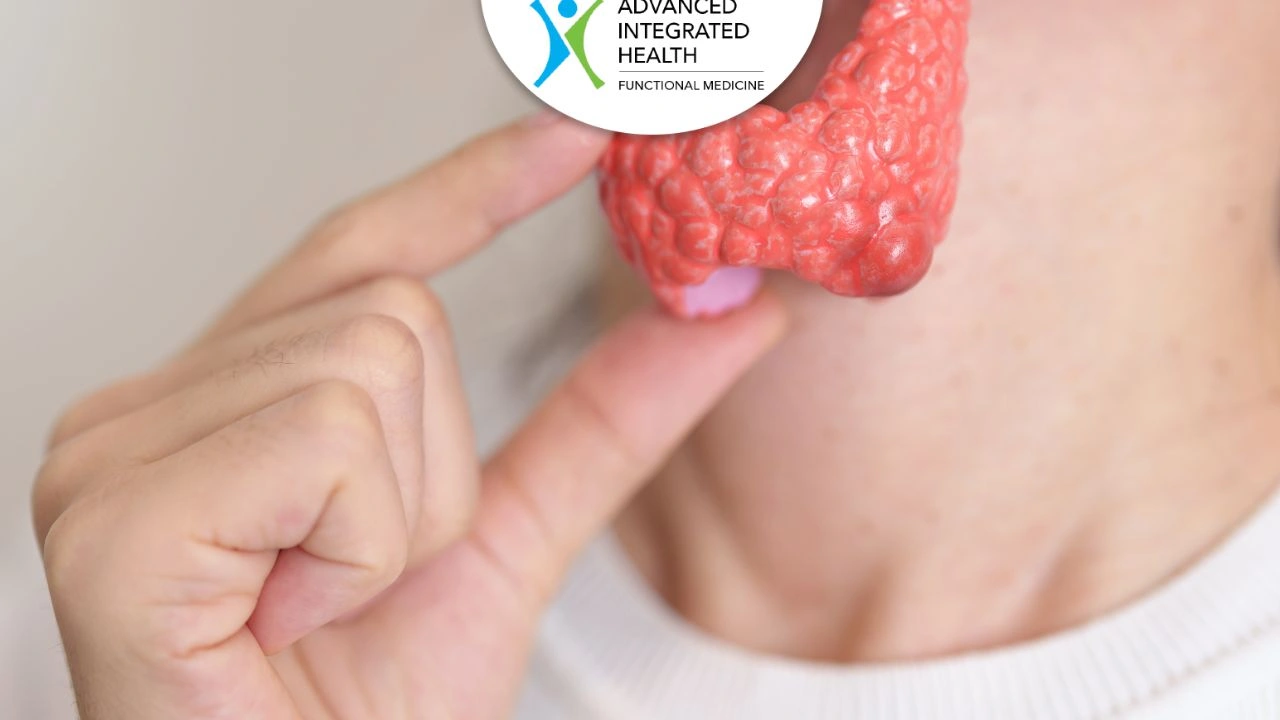
The lab panel that actually catches Hashimoto’s
If you’ve only ever had a TSH test, you’ve been missing 80% of the picture. Here’s what a complete thyroid workup looks like for someone with symptoms or a family history of autoimmune thyroid disease.
Quick facts:
- TSH: Optimal range is roughly 1.0 to 2.0 mIU/L. Conventional ranges go up to 4.5 or 5.0, which misses early Hashimoto’s.
- Free T4: The hormone your thyroid makes. Check it’s not at the bottom of the range.
- Free T3: The active hormone. The conversion from T4 to T3 is where most subclinical issues hide.
- Reverse T3: Inactive form of T3. High reverse T3 with normal T4 means stress or illness is shunting the hormone the wrong way.
- TPO antibodies: The single most diagnostic test. Elevated TPO is Hashimoto’s until proven otherwise.
- TgAb (Thyroglobulin antibodies): The second autoimmune marker. About 80% of Hashimoto’s patients have it.
- Optional but useful: Vitamin D (25-OH), ferritin, vitamin B12, zinc, selenium, hs-CRP, fasting glucose, HbA1c
Can Hashimoto’s be reversed?
The autoimmune process can be slowed or sent into remission. People consistently see TPO antibody levels drop, sometimes to undetectable, after addressing triggers. Documented thyroid tissue regeneration is rare, so most patients still need some thyroid hormone replacement.
The goal is: stop the immune attack, preserve remaining thyroid function, and feel like yourself again. Some patients reduce or eliminate medication over time. Others stay on a small replacement dose but feel completely well.
What does not work: ignoring it. Untreated Hashimoto’s progresses. Antibody levels climb, more thyroid tissue is destroyed, and over years you can develop overt hypothyroidism, fertility issues, cardiovascular problems, and an increased risk of thyroid lymphoma (rare but real).
The NIDDK overview of hypothyroidism has the standard medical detail on long-term consequences.
Frequently asked questions
What’s the difference between Hashimoto’s and hypothyroidism?
Hypothyroidism means your thyroid isn’t producing enough hormone. Hashimoto’s is the autoimmune cause behind most cases of hypothyroidism in countries with adequate iodine. You can have Hashimoto’s antibodies for years before becoming hypothyroid; that early window is the best time to intervene.
Can you have Hashimoto’s with normal TSH?
Yes, and it’s common. The classic pattern is elevated TPO antibodies with TSH still inside the lab’s normal range. This is sometimes called euthyroid Hashimoto’s. The autoimmune attack is happening; thyroid output just hasn’t dropped enough to register on TSH yet.
Do you have to take levothyroxine for life?
Most people with established Hashimoto’s do, because the thyroid tissue lost during years of autoimmune attack doesn’t fully regenerate. But the dose required can drop substantially when antibody levels fall. Some patients with early-stage disease who address triggers aggressively never need to start medication.
Is gluten really linked to Hashimoto’s?
The link is real, especially when celiac antibodies are present. Studies show measurable antibody reductions on a strict gluten-free diet within 3 to 6 months. Gluten isn’t the only food worth investigating, but it’s where the strongest evidence sits and where most patients should start.
How long until I feel better after addressing root causes?
Most patients notice symptom improvement in 4 to 8 weeks of consistent change. Antibody titers usually start dropping at 3 to 6 months. Full normalization, where antibodies are at or near undetectable and energy and cognition feel restored, often takes 12 to 18 months of sustained work.
Final thoughts
Hashimoto’s is not a thyroid disease that happened to you. It’s an immune system that’s lost its ability to tell self from foreign, with the thyroid as the tissue under attack. Levothyroxine fills the hormone gap but does nothing to slow the underlying process. Identifying and reducing the triggers (stress, infections, nutrient gaps, food sensitivities, toxin load) through natural solutions to thyroid disorders is what actually changes the disease trajectory. If you’re seeing the classic signs (fatigue, cold intolerance, weight changes, brain fog, hair thinning, cycle irregularities) and your TSH keeps coming back “normal,” ask for the full panel.
Sources
National Institute of Diabetes and Digestive and Kidney Diseases (NIDDK). Hashimoto’s Disease.
https://www.niddk.nih.gov/health-information/endocrine-diseases/hashimotos-disease
National Institute of Diabetes and Digestive and Kidney Diseases (NIDDK). Hypothyroidism (Underactive Thyroid).
https://www.niddk.nih.gov/health-information/endocrine-diseases/hypothyroidism
American Thyroid Association. Hashimoto’s Thyroiditis (Lymphocytic Thyroiditis).
https://www.thyroid.org/hashimotos-thyroiditis/
Janegova A, Janega P, Rychly B, Kuracinova K, Babal P. The role of Epstein-Barr virus infection in the development of autoimmune thyroid diseases. Endokrynol Pol. 2015;66(2):132-136.
https://pubmed.ncbi.nlm.nih.gov/25931043/
Toulis KA, Anastasilakis AD, Tzellos TG, Goulis DG, Kouvelas D. Selenium supplementation in the treatment of Hashimoto’s thyroiditis: a systematic review and a meta-analysis. Thyroid. 2010;20(10):1163-1173.
https://www.liebertpub.com/doi/10.1089/thy.2009.0351
Krysiak R, Szkróbka W, Okopień B. The Effect of Gluten-Free Diet on Thyroid Autoimmunity in Drug-Naive Women with Hashimoto’s Thyroiditis: A Pilot Study. Exp Clin Endocrinol Diabetes. 2019;127(7):417-422.
https://pubmed.ncbi.nlm.nih.gov/30060266/
Knezevic J, Starchl C, Tmava Berisha A, Amrein K. Thyroid-Gut-Axis: How Does the Microbiota Influence Thyroid Function? Nutrients. 2020;12(6):1769.
https://pubmed.ncbi.nlm.nih.gov/32545596/
Mazokopakis EE, Papadomanolaki MG, Tsekouras KC, Evangelopoulos AD, Kotsiris DA, Tzortzinis AA. Is vitamin D related to pathogenesis and treatment of Hashimoto’s thyroiditis? Hell J Nucl Med. 2015;18(3):222-227.
https://pubmed.ncbi.nlm.nih.gov/26637501/

Dr. Bob was born and raised in Florham Park, New Jersey.
He loved the philosophy of vitalism, which teaches about the incredible, innate intelligence of our bodies and its power to self-heal when given the opportunity.