
Functional medicine is a way of looking at health care that focuses on the whole person. Instead of just treating a symptom, it tries to find out why you are sick. It digs deep to find the root cause of the problem. This method uses a mix of science, nutrition, and changes to your daily habits to help you restore health.
This approach is different from regular medicine, which often just uses medicine to stop pain or symptoms for a short time. Functional medicine wants to fix the system so your body works well again. In this guide, we will look at how this works and what you can expect.
Key Takeaways on Functional Medicine
Three main ideas shape this type of care:
- It looks for the real reason behind your symptoms, not just the symptoms themselves.
- The plan is made just for you, based on your body and genes.
- It uses regular medical tests along with natural therapies.
Functional Medicine Services for Personalized Healing
Functional medicine services focus on how your body is built. The goal is to get your body working the way it should. The Institute for Functional Medicine teaches that care must start with knowing your genes and your life story.
A 2024 report by Grand View Research showed that “traditional alternative medicine” and botanicals are now dominant market trends. This confirms that people want a plan that fits them, not a “one size fits all” answer.
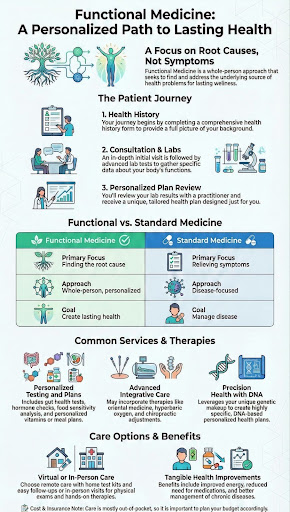
The first step is a long talk with your doctor. They will look at your history, what you eat, and where you live. This helps create a timeline to see what made you sick. You and the doctor work as a team. You will look at test results together to understand what is happening inside you.
Common services include:
- Tests to check your stomach and gut health.
- Checks for your hormones.
- Tests to see if certain foods bother you.
- Plans for vitamins and meals made just for you.
Root Cause Resolution in Integrative Healthcare

This type of health care finds the trigger of an illness. It does not just cover up the pain. A 2019 study in JAMA Network Open compared functional medicine to standard internal medicine at the Cleveland Clinic. It showed that functional medicine patients had significantly better improvements in physical health scores after six months. This model links different symptoms to one main source.
For example, being tired and having joint pain might come from inflammation in your stomach. A normal doctor might treat the pain and the tiredness separately. A functional doctor asks why the stomach is hurting. It could be an infection or stress on your nervous system.
“We are trained to ask ‘why’ repeatedly until we reach the precipitating event. This is the art of clinical detective work.” – Dr. Mark Hyman, Director of the Cleveland Clinic Center for Functional Medicine. The process is step-by-step. First, you might fix your sleep and blood sugar. Then, you stop eating foods that hurt you. After that, you use special treatments. This builds a strong base to restore health.
Virtual vs In-Person Functional Medicine Care
You can choose to see a doctor online or go to a functional medicine clinic. Many people like the ease of online calls. A 2022 survey by the American Medical Association found that 80% of physicians had adopted telehealth solutions to care for patients. This helps people who live far away.
However, some things must be done in person. You cannot do a full physical exam online. Treatments like chiropractic care or hyperbaric oxygen therapy need you to be there. The first visit is often better in person, so the doctor can really see how you are doing.
| Feature | Virtual Care | In-Person Care |
|---|---|---|
| Access | Good for people far away | You must be close to the clinic |
| Tests | You do kits at home | Includes oxygen therapy, exams, and IVs |
| Consistency | Easy to check in often | Harder if you have to travel |
| Cost | Often costs less | Includes fees for the building and staff |
Chronic Disease Management with Functional Medicine
Managing long-term sickness requires a lifestyle change. You have to stop thinking only about pills and start thinking about the whole body. This is a holistic approach. The famous Diabetes Prevention Program (DPP) research showed that structured lifestyle changes reduced the risk of developing Type 2 Diabetes by 58%. The goal is to make the body healthy so disease cannot stay.
Conditions like high blood pressure or autoimmune issues are signs that something is wrong deep down. The fix might be a diet that calms the body. It might include vitamins to give you energy. You might also learn ways to relax your nervous system.
This path is not a straight line. You might feel more energy before your blood tests look better. Sticking to your lifestyle change is the best way to win. The doctor acts as a guide. The goal is for you to learn how to take care of yourself.
The Advanced Integrative Healthcare Model
The advanced model mixes old ways, like oriental medicine, with new technology. This creates a strong healing place. Grand View Research reported in 2024 that the global market for these complementary therapies has reached $179 billion. It is very good for hard cases, like recovering from a personal injury or bad fatigue.
A plan might use needles from oriental medicine to help energy flow. At the same time, you might use hyperbaric oxygen to help tissues heal. Chiropractic rehabilitation can fix body alignment issues. The model is flexible. It uses different tools to reach one goal.
This takes a lot of planning. The main doctor makes sure all the treatments work well together. They might combine oxygen therapy with physical adjustments. This high-level care can cost more, but it is very thorough.
Preventative Wellness and Longevity Medicine

Longevity medicine is about staying healthy for a long time. It uses things like holistic detox to clean the body. In 2023, Grand View Research valued the global anti-aging market at over $63 billion. Doctors use tests to see how “old” your body is acting, which can be different from your real age.
Doctors use tools to check your blood sugar and genes. You might use hyperbaric oxygen to help your cells repair themselves. Food plans are made to help your body fix old cells. The goal is to be strong before you get sick.
These plans are very personal. If your family has heart problems, your plan will be different from someone worried about their memory. We use data to make choices. This turns “wellness” into real steps you can take. It uses oxygen therapy and other tools to keep you functioning well.
Bio-Individuality, Genetics, and Precision Health
Precision health uses your DNA to make a plan. This is much more than a simple shape-up program. A classic 2007 study by Dr. Arkadianos showed that 73% of patients using genetic data maintained their weight loss, compared to only 32% of those who did not. Your DNA provides a blueprint for how you process nutrients, manage stress, and detoxify.
For example, some genes affect your heart and brain. A doctor who knows this can give you the right vitamins. Your genes can even tell us the best way to handle smoking cessation or stress. This moves recommendations from general advice to personal prescription.
The process involves:
- Analyzing data from genetic testing services.
- Interpreting results in the context of your current symptoms.
- Designing dietary and supplement plans that work with your biology.
- Avoid one-size-fits-all approaches that may be ineffective or harmful for you.
Navigating Cost, Insurance, and Financial Realities
The main hard part is the cost. Most natural functional medicine is not covered by insurance. While the first visit costs money, many people use special health savings accounts. These funds can help pay for things like chiropractic rehabilitation.
Insurance might pay for normal blood tests. But it rarely pays for the long time the doctor spends with you. It also may not cover chiropractic care or specialized health care tests. You should ask for a receipt to send to your insurance, just in case.
You have to plan for the cost. A good doctor will tell you the prices first. Some say paying now helps you save money later by not getting sick. It is a choice about where to put your resources.
The New Patient Onboarding Process
Starting at a functional medicine clinic takes some work. This ensures they know everything about you. It usually starts with a very long form. You have to write down your whole health history, not just what hurts today. You will list your state of health over your whole life.
After they read your history, you have a long first visit. The doctor listens to your story. They will guess what the root cause is. Then, they will order lab tests. This data helps them stop guessing.
The steps are:
- Fill out the long health history forms.
- Have a long first visit and exam.
- Agree on a plan for lab tests.
- Give samples and wait for results.
- Go back to review the results and get your plan.
A Final Perspective on Functional Foundations
Functional medicine offers a new map for health. It looks for the cause and uses many ways to heal. The model needs you to do the work. You have to be willing to change and invest time.
Success depends on working well with your practitioner. The goal is not just to feel less pain, but to have a better state of health. It treats you as a unique person. The final aim is to give you the tools to manage your own well-being for a long time.
Are you ready to discover the root cause of your health concerns? Click here to book your Health Strategy Session today.

Dr. Bob was born and raised in Florham Park, New Jersey.
He loved the philosophy of vitalism, which teaches about the incredible, innate intelligence of our bodies and its power to self-heal when given the opportunity.