
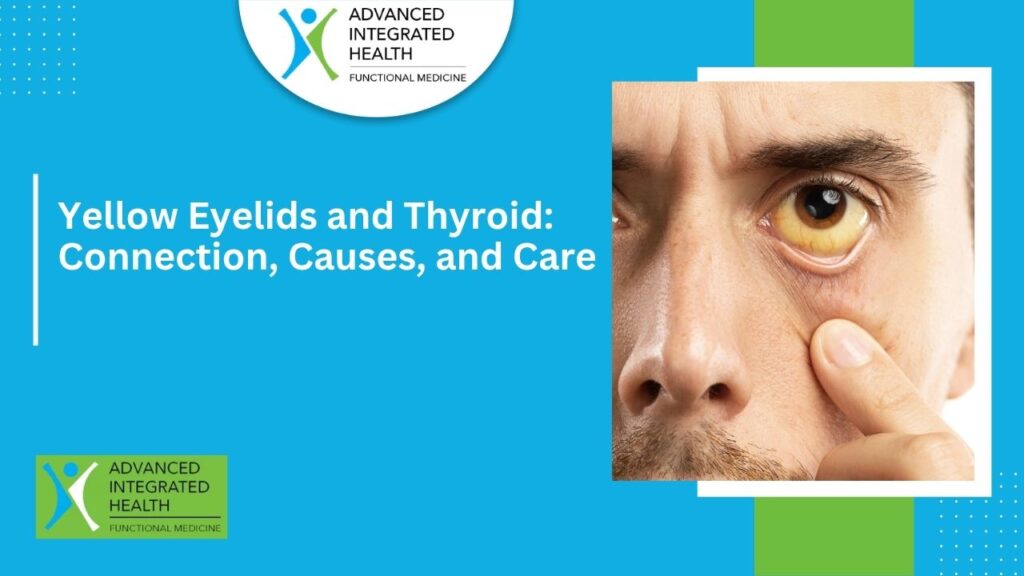
Have you noticed soft, yellow patches forming on your eyelids lately? Do you wonder why your skin color seems to be changing specifically around your eyes? It’s easy to dismiss these spots as a cosmetic issue. Yet, your skin often acts as a mirror for your internal health. For many people, the link between yellow eyelids and thyroid dysfunction is an early red flag that should not be ignored.
The thyroid gland controls almost every metabolic process in your body. When it fails to work correctly, the effects show up in unexpected places. Yellowing around the eyes can stem from cholesterol buildup or vitamin processing issues. Let’s help you understand the connection between your thyroid and these visual symptoms.
Quick Summary
Yellow eyelids are often fatty deposits called xanthelasma. They frequently signal high cholesterol levels caused by an underactive thyroid.
- The Thyroid Link: Hypothyroidism slows down the clearance of LDL cholesterol from your blood.
- Carotenemia: Low thyroid function can also cause a yellow-orange skin tint from unprocessed beta-carotene.
- Action Steps: A full thyroid panel and lipid profile are necessary for a correct diagnosis.
- Treatment: Managing the underlying thyroid condition is the first step to stopping new deposits.
What Are Yellow Eyelids? Understanding Xanthelasma
The most common cause of yellow patches on the eyelids is a condition called xanthelasma palpebrarum. These are localized deposits of cholesterol. They usually appear as soft, yellowish papules or plaques. You will most often find them near the inner corners of your upper or lower eyelids. While these growths are painless, they do not go away on their own. They tend to grow slowly over time. Xanthelasma itself is harmless. However, it is a significant indicator of underlying lipid disorders. About half of the people who develop these patches have high cholesterol levels.
The Thyroid Connection: Why Hypothyroidism Matters
How does a small gland in your neck cause yellow spots on your eyes? The answer lies in your metabolism. Hypothyroidism, or an underactive thyroid, slows down your body’s ability to process fats. Thyroid hormones are responsible for increasing the number of LDL receptors in your liver. These receptors act like magnets. They pull “bad” cholesterol out of your blood so your body can dispose of it.
When thyroid levels are low, you have fewer receptors. This causes LDL cholesterol to circulate in your blood for longer periods. Eventually, this excess cholesterol starts to deposit in your tissues. The skin around the eyes is very thin. This makes it one of the first places where these fatty deposits become visible. Healthline explains that treating the thyroid is often the most effective way to lower these specific cholesterol levels.
Carotenemia: Another Thyroid-Related Yellowing
Not all yellowing is caused by fat deposits. Sometimes, the skin itself takes on a yellow or orange tint. This condition is known as carotenemia. It happens when you have too much beta-carotene in your blood. Normally, your thyroid hormones help convert beta-carotene into Vitamin A. If your thyroid is sluggish, this conversion process stalls. The beta-carotene builds up in your system. It then leaches into the sweat and oils of your skin. You will notice this yellowing most clearly on your eyelids, palms, and the soles of your feet. Unlike other conditions, the whites of your eyes will remain white. Research on PMC suggests that carotenemia is a classic, though often missed, sign of hypothyroidism.
Xanthelasma vs. Jaundice: Knowing the Difference
It is vital to distinguish between metabolic yellowing and jaundice. Jaundice is a sign of liver or gallbladder failure. It occurs when a waste product called bilirubin builds up in the body. The easiest way to tell the difference is to look at the sclera. This is the white part of your eye. In jaundice, the sclera turns distinctly yellow. In thyroid-related conditions like xanthelasma or carotenemia, the sclera stays white.
Comparison of Yellowing Causes Around the Eyes
| Condition | Primary Cause | Visual Appearance | Sclera Color |
| Xanthelasma | Cholesterol buildup | Raised, soft yellow patches | White |
| Carotenemia | Beta-carotene buildup | Generalized yellow-orange tint | White |
| Jaundice | Bilirubin buildup | Deep yellow skin tone | Yellow |
Other Common Symptoms of Thyroid Dysfunction
Yellow eyelids rarely appear alone. If your thyroid is the root cause, you will likely notice other systemic symptoms.
- Unexplained Fatigue: You feel exhausted even after a full night of sleep.
- Weight Gain: Your metabolism slows down, making it hard to maintain your weight.
- Cold Intolerance: You feel chilly when everyone else is comfortable.
- Dry Skin and Hair: Your skin may feel itchy, and your hair might become brittle or thin.
- Constipation: A slow metabolism also slows down your digestive tract.
According to the Mayo Clinic, these symptoms develop slowly over years. Many people do not realize they have a problem until the physical signs like yellow eyelids appear.
How Doctors Diagnose the Root Cause
If you notice yellowing on your eyelids, you should schedule a checkup. A physical exam is the first step. Your doctor will look at the texture and location of the patches.
Essential Diagnostic Tests
- TSH Test: This measures Thyroid Stimulating Hormone. High levels usually mean your thyroid is underactive.
- Free T3 and Free T4: These tests measure the actual hormones produced by your gland.
- Lipid Panel: This checks your total cholesterol, LDL, HDL, and triglycerides.
- Liver Function Test: This rules out jaundice or other liver-related issues.
Medical Treatments for Yellow Eyelids and Thyroid
Treatment usually happens in two stages. First, you must address the internal hormone balance. Second, you can remove the physical patches if they bother you.
Thyroid Hormone Replacement:
Most patients take a synthetic hormone like Levothyroxine. This speeds up your metabolism and helps your liver clear cholesterol.
Cholesterol Medications:
If thyroid treatment is not enough, your doctor may add a statin. This further lowers the circulating fats in your blood.
Direct Removal:
Dermatologists can remove xanthelasma using lasers or chemical peels. Some cases require minor surgery. However, if you do not fix your cholesterol, the patches will likely return.
Natural Strategies for Thyroid and Cholesterol Support
You can support your medical treatment with targeted lifestyle changes. These strategies help lower the burden on your adrenal and thyroid glands.
Dietary Adjustments
Reduce your intake of saturated fats and trans fats. These contribute directly to cholesterol buildup. Instead, focus on soluble fiber. Foods like oats, beans, and apples act like a sponge. They soak up cholesterol in your gut and remove it from your body.
Essential Micronutrients
Your thyroid needs specific minerals to function. Selenium and iodine are the most important. You can find selenium in brazil nuts and seafood. Iodine is common in seaweed and iodized salt. Always check with a professional before taking high doses of iodine.
Stress and Sleep
High stress levels produce cortisol. Cortisol can interfere with thyroid hormone production. Aim for at least seven hours of sleep to keep your endocrine system stable. Consistent rest helps regulate your metabolic rate naturally.
Frequently Asked Questions
Are yellow eyelids dangerous?
The patches themselves are not dangerous. However, they are a strong warning of heart disease risk. They suggest that your body is struggling to manage fats correctly.
Will the patches disappear if I take thyroid medication?
Sometimes they shrink, but they rarely disappear completely. Medication stops new ones from forming. You usually need a cosmetic procedure to remove existing plaques.
Can I use a cream to remove xanthelasma?
Topical creams are generally ineffective. These deposits are deep within the skin layers. Professional treatments like cryotherapy or laser are much more reliable.
Does eating too many carrots cause yellow eyelids?
Eating excessive amounts of carrots can cause carotenemia. This is a general yellowing of the skin. However, the raised, fatty patches of xanthelasma are caused by cholesterol, not diet alone.
Final Thoughts
Yellow eyelids are more than a beauty concern. They are a clear signal that your metabolism needs attention. Whether the cause is high cholesterol or a sluggish thyroid, early intervention is key. Focus on getting a comprehensive blood panel. This will provide the data you need to make informed decisions.
You must address all the root causes, which will protect your heart and your vision for the long term. Here’s what you should do:
- Consult an endocrinologist for thyroid testing.
- Monitor your cholesterol levels regularly.
- Improve your fiber intake to support detoxification.
If your symptoms linger, do not ignore them. A professional evaluation can uncover the hidden triggers of your hormonal shift. For guidance on integrated health along with holistic and functional solutions, explore the resources at Advanced Integrated Health. Schedule a checkup today.

Dr. Bob was born and raised in Florham Park, New Jersey.
He loved the philosophy of vitalism, which teaches about the incredible, innate intelligence of our bodies and its power to self-heal when given the opportunity.